

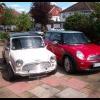


A British car to beat the world?
"When the British government stepped in to rescue the ailing British Leyland in 1975, a major reason was to protect the balance of payments, for the firm’s products had for years strengthened the national trade balance – not just by keeping out imports, but also by finding customers abroad, and none more so than the Mini.
In its early seventies heyday more Minis were sold abroad than at home – helped it must be said by local assembly and in some cases full-scale local manufacture. So although it may not have been earning a great deal of profit for its maker directly, it was bolstering the overall economy significantly – for trade deficits detract from the wealth of the nation.
No surprise then that a ‘new Mini’ was central to the rescue package for British Leyland, with the State underwriting both development of ADO88 as it was coded initially, and a vast new factory at Longbridge (New West Works) to help build it – investments that absorbed hundreds of millions of taxpayers’ money during the late ‘70s."
A new dawn.
"The Austin Metro as it was eventually christened was expected to sell as well in export markets as domestically and production capacity reflected that, with Longbridge capable of building over 300,000 Metros annually. Strong exports would be needed if production numbers were to match the Mini’s record and deliver the intended ‘economies of scale’, for although the British market doubled in size between the ’60s and the ’80s, it also became much more fragmented with the best-sellers including Metro selling in numbers barely greater than their ’60s forebears. Most of the countries beyond Europe which had imported or manufactured the Mini were closed to the Metro, for reasons explored below."
Good at home, not so brilliant abroad...
"So although the car did very well domestically, exports were modest by comparison. Of the 1,446,000 Metros built with the A-Plus engine in the 1980s only around 400,000 were exported rather than perhaps a million as planning had once implied, and overall production suffered as a result, never breaking the 200,000 barrier in any calendar year. Mini production credited to the UK (including kits for overseas assembly) by contrast peaked at 320,000 cars in 1971 – even though only 100,000 were sold in Britain that year, highlighting the Mini’s superior export ratio."
The Full Metro Export Story is now on AROnline:-
https://www.aronline...e-export-story/


